
Saturday night, Norma Jean and I watched the live stream of the Grand Ole Opry, which honored the recently deceased country music legend, Dolly Parton.
Among the performers was Dolly’s niece, Jada Star. On behalf of the family, she expressed appreciation for the incredible outpouring of sympathy following Dolly’s passing. Then she shared this poignant thought:
“The weight of grief is lighter when we bear it together.”
Jada’s observation is spot on.
It reminded me of Paul’s exhortation to “weep with those who weep” (Rom. 12:15). This spirit calls for sympathy and empathy. It speaks of a heart filled with compassion and kindness.
Jesus is our great example. Although He knew He was going to raise Lazarus from the dead, when He saw Mary and those with her weeping, He entered into their sorrow. The Bible simply says, “Jesus wept” (Jn. 11:35).
Jada’s statement also echoes the command of Galatians 6:2: “Bear one another’s burdens, and so fulfill the law of Christ.”
The death of a loved one is one of life’s most difficult burdens to bear. Yet the load is lightened when others come alongside us and share our sorrow. Through shared tears, we often develop a deeper and stronger bond with our friends, family, and brethren.
When the Old Testament patriarch Job suffered devastating loss—his possessions, his health, and the sudden death of his children—three friends came to see him. We typically remember them for their bad theology and even worse words. However, before Job’s friends said many things they shouldn’t have said, they did two things exactly right.
First, they came.
The Bible says “they came to mourn with him and comfort him” (Job 2:11).
There is something special about the presence of a friend who comes to share our grief. How often have we heard a mourner remark at a funeral about someone who traveled a long distance, “Thanks for coming. It means a lot.”
Cards, letters, phone calls, and text messages are good. But sometimes there is no substitute for simply being there.
Second, they sat.
For seven days Job’s friends sat with him and didn’t say a word, “because they saw that his grief was very great” (Job 2:13).
In the face of unspeakable tragedy and overwhelming grief, silence can indeed be golden.
The power of just being there is vividly illustrated in Joseph Bayly’s book The View from a Hearse. Bayly knew grief firsthand—he and his wife lost three sons. He described two very different visits during his grief.
“I was sitting, torn by grief. Someone came and talked to me of God’s dealings, of why it happened, of hope beyond the grave. He talked constantly. He said things I knew were true.
“I was unmoved, except to wish he would go away. He finally did.
“Another came and sat beside me. He didn’t talk. He didn’t ask leading questions. He just sat beside me for an hour and more, listened when I said something, answered briefly, prayed, left.
“I was moved. I was comforted. I hated to see him go.”
Bearing the burden of grief is often less about what we say and more about simply being there—offering our presence, care, concern, and compassion when words fail us.
However, I couldn’t help but reflect on Jada Star’s observation. Her family has received a nationwide—even worldwide—outpouring of condolences. Few people will ever experience that.
The rest of us have a much smaller circle of people to share sorrow’s burden. And it caused me to wonder: What about those who don’t have a church family? Where do they turn? Who comes? Who sits? Who listens? Who helps carry their grief?
And maybe there’s an even more important question for Christians:
Are we willing to be that family for someone who doesn’t have one?
One of the great blessings of God’s family is having people who will help carry the weight when life becomes too heavy to bear alone. Don’t take that blessing for granted. Cherish it. And when someone else is grieving, be that blessing.
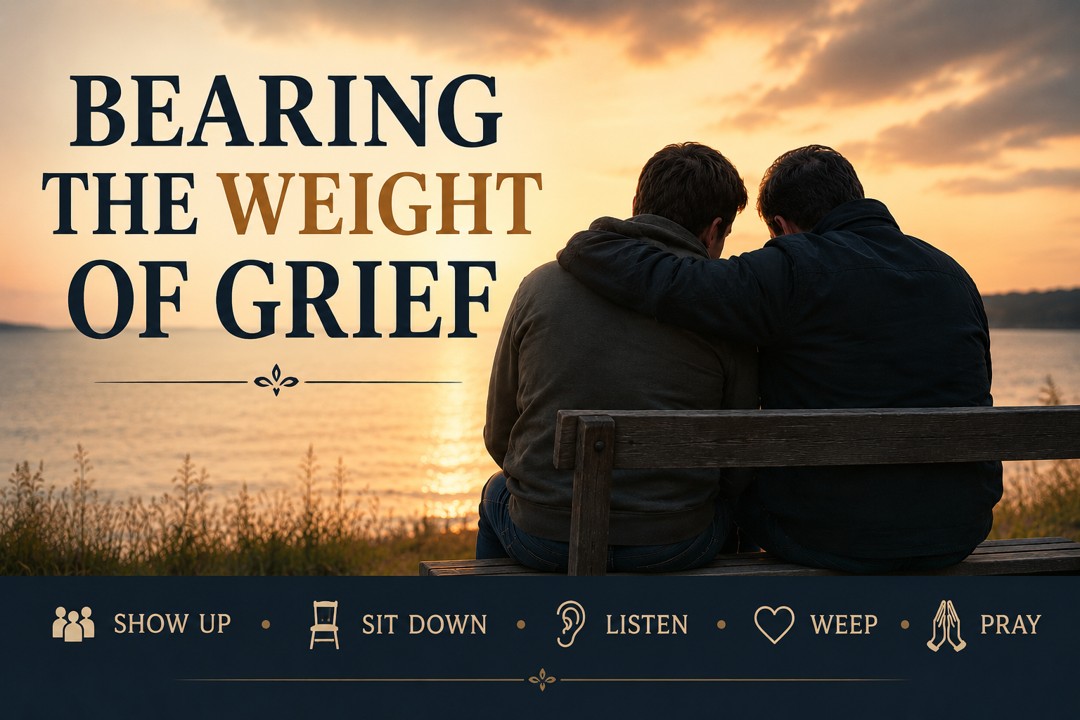
Show up. Sit down. Listen. Weep. Pray. Sometimes say nothing at all.
“Bear one another’s burdens, and so fulfill the law of Christ” (Gal. 6:2).
Because Jada Star was right: “The weight of grief is lighter when we bear it together.”
Or, as an old Swedish proverb puts it, “Friendship doubles our joy and divides our grief.”
–Ken Weliever, The Preacherman


Dolly Parton truly loved much and her love is still alive and giving joy to many. Yes those closest to her will miss the opportunities to work or hang out with her. And yes…some of those closest to her will not want to hear how they will see her again one day. They will shut out the biblical passages that defeat death and remind Jesus’ followers that death is not the end. When I lost my husband …silence was not something I needed. Being all alone with the silence of our home was unbearable. The most helpful comments were those that…reminded me that that death was not the end…and comments from other widows were most welcome. One in particular…”the first year and the first significant shared events…are the hardest.” Another was…”allow yourself to grieve.” I remember being so angry…that he went away and left me and how helpful it was that other widows told me that it was okay to be angry because anger was part of grief…That was 17 years ago now. Now…I know my husband’s passing was a God event…and part of living that helped me develop a stronger and more profound faith in John’s testimony and John’s Gospel in particular. Granted everyone grieves differently because no two human beings are exactly alike—even twins. So if silence does it for you…or being left alone is the best way for you to work through your grief…well make sure those closest to you know that you are not shutting them out. Let them know you appreciate their concern for you and for your loved one who has passed into the next life. And remember some of your closest friends and or relatives may not share your faith in Jesus the forerunner.
LikeLike
Pingback: Weekly Recap: August 31-September 4 | ThePreachersWord