
The late Des Oatridge worked for many years as a Bible translator in Papua New Guinea. One day, he came across the words “born again” in John 3:3–5.
Oatridge asked his native co-translator for a good way to express it. The man explained this custom:
“Sometimes a person goes wrong and will not listen to anybody. We all get together in the village and place that person in the midst of us. The elders talk to him for a long time. ‘You have gone wrong!’ they say. ‘All your thoughts, intentions, and values are wrong. Now you have to become a baby again and start to relearn everything right.’”
It was the answer Des was looking for. The account renders John 3:3 in Binumarien as: “No one can see the Kingdom of God unless he becomes like a baby again and relearns everything from God’s Word.”
The illustration captures the willingness to begin anew. Jesus, however, calls us to more than relearning. He calls us to a new spiritual life.
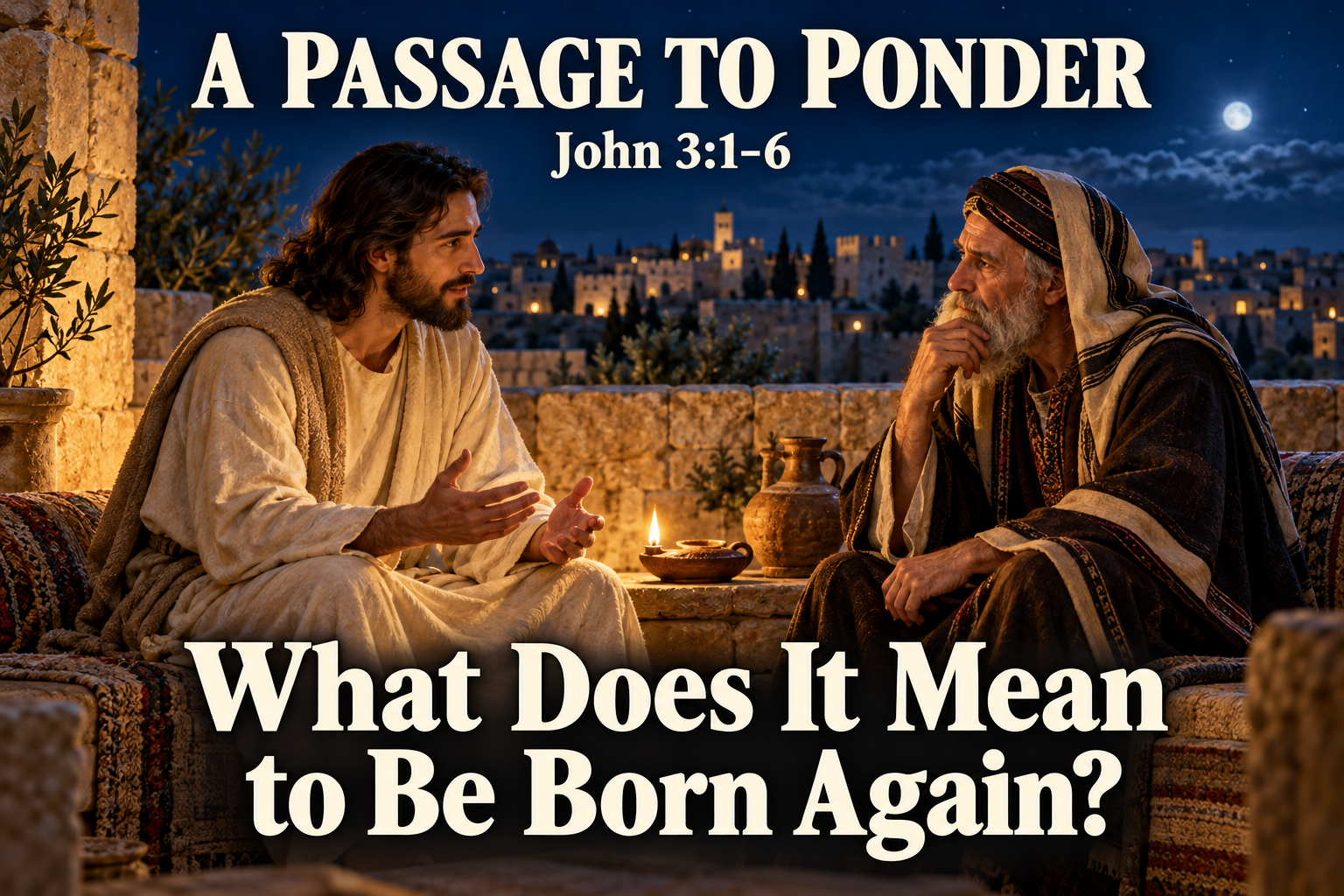
In our text, Nicodemus, a ruler of the Jews, came to Jesus to learn from Him. Jesus told him, “Most assuredly, I say to you, unless one is born again, he cannot see the kingdom of God.”
Perplexed by the answer, Nicodemus said to Him, “How can a man be born when he is old? Can he enter a second time into his mother’s womb and be born?”
Jesus answered, “Most assuredly, I say to you, unless one is born of water and the Spirit, he cannot enter the kingdom of God.”
The new birth Jesus announced was a spiritual rebirth. Three important elements stand out: water, Spirit, and the kingdom of God.
First, consider what “Spirit” means.
The Spirit refers to the Holy Spirit, who descended on Jesus at the beginning of His ministry when He was baptized. Later, Jesus promised the apostles that they, too, would receive the Spirit, who would lead them into all truth (John 16:13).
Paul explained that the Spirit had revealed the mystery of Christ and that his readers could understand it through what he had written (Eph. 3:3–5). His message expressed God’s revealed wisdom, not merely human ideas (1 Cor. 2:9–13).
Today, we have the Spirit-inspired Word to guide, direct, teach, and correct us (2 Tim. 3:16–17). Peter explicitly connects the new birth with “the word of God which lives and abides forever” (1 Pet. 1:23). Through that Word, we hear God’s message, believe it, and learn how to respond. In that way, the Spirit is involved in the new birth.
Secondly, water refers to baptism.
Some have tried to make water something figurative. Others have said it speaks to a literal birth, as when a woman giving birth is described as having her “water break.” However, Jesus plainly tells Nicodemus that He’s talking about a spiritual birth.
While commentators from various theological backgrounds disagree about the purpose of baptism, many identify the water in this passage as a reference to baptism. These include Albert Barnes, H. A. W. Meyer, Ellicott, and the Cambridge Bible commentary.
B. W. Johnson explains that water and the Spirit belong together in conversion. Baptism without faith does not accomplish the new birth; neither should someone claim spiritual birth while refusing baptism. He connects the Spirit’s work with hearing and obeying the Spirit’s message.
Peter, speaking by inspiration of the Holy Spirit, told his hearers to repent and be baptized for the remission of sins (Acts 2:38). Later, Peter affirmed that baptism “now saves us,” explaining that its significance involves our response to God and the resurrection of Jesus Christ, rather than merely washing the body (1 Pet. 3:21).
Third, the one born again enters the kingdom of God.
Various religious groups have claimed that the kingdom hasn’t come yet. However, Jesus said in Mark 9:1, “Truly, I say to you, there are some standing here who will not taste death until they see the kingdom of God after it has come with power.”
In Acts 2, when the apostles preached on Pentecost, the Holy Spirit was poured out in a marvelous, miraculous fashion. That day, when about 3,000 people obeyed the gospel, the kingdom began.
Afterward, Luke records the preaching of the kingdom throughout Acts (Acts 8:12; 19:8; 28:30-31). Paul reminded Christians that God had already delivered them from darkness and brought them into His Son’s kingdom (Col. 1:13). They were citizens of an existing kingdom.
Being born again involves “obeying the truth,” having “your souls purified,” and expressing “sincere love” for the brethren from “a pure heart” (1 Pet. 1:22–23).
The one born again is a spiritual babe who needs to grow (Heb 5:12-14), a “new creation” in Christ (2 Cor. 5:17).
Being born again begins a new life of learning, growing, and loving. We enter God’s kingdom as spiritual babes, ready to let His Word shape our thoughts, values, and conduct.
Jesus’ words to Nicodemus still ring true today—“You must be born again!”
–Ken Weliever, The Preacherman

