
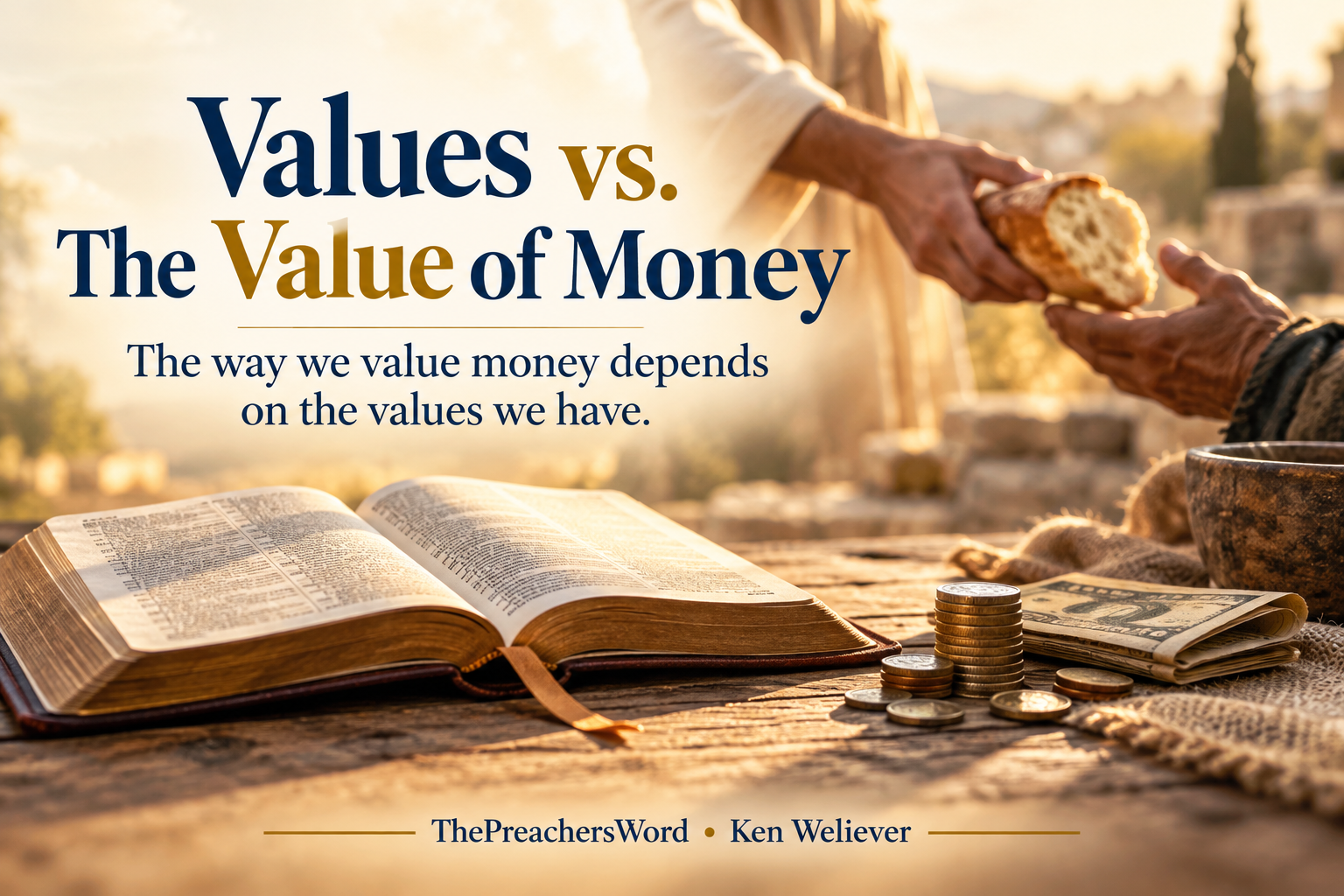
“Teens increasingly say that having a lot of money is important,” is the headline from a recent report.
Since 1976, researchers have been tracking shifting generational values. In the Monitoring the Future study, researchers asked teens: “How important is [having lots of money] to you in your life?”
In 1976, 36 percent of 12th-grade girls and 55 percent of boys said accumulating wealth was a major priority.
Over the next 15 years, both boys and girls reported that being wealthy was important to them at higher rates. After plateauing through the 2000s, the reported importance of money is rising again among youth.
In 2024, approximately 75 percent of 12th-grade boys and girls said having lots of money was important.
While becoming financially successful isn’t wrong per se, our current culture too often measures one’s worth by net worth. Scripture often addresses this issue.
When a man approached Jesus about becoming an arbitrator in an inheritance dispute, Jesus warned, “Take heed and beware of covetousness, for one’s life does not consist in the abundance of the things he possesses” (Lk. 12:15).
God calls us to guard our hearts against greed, which the Bible says amounts to idolatry (Col. 3:5). It’s an unholy desire that the apostle Paul urges Christians to “put to death.”
Reflecting on this thought reminded me of a post I wrote several years ago titled 5 Things More Important Than Money. They were:
- Humility
- Passion
- Unity
- Servanthood
- Thankfulness
That prompted a follow-up: 5 More Things More Important Than Money. They included:
- Time
- Faith
- People
- Wisdom
- Your Soul
No doubt we could identify five more—or perhaps fifteen more—things more important than money.
Jesus forever settled the relative worth of money, wealth, and possessions with these two important, probing questions:
“What profit is it to a man if he gains the whole world and loses his own soul? Or what will a man give in exchange for his soul?” (Matt. 16:26).
However, the way we value money depends on the values we have.
Using money with wisdom and humility can help us serve people, express gratitude, and support charities, colleges, and good works we care about. Through prudence, good stewardship, and financial wisdom, we can support the preaching of the gospel, help the needy, and provide for our family and even extended family.
As P. T. Barnum wrote, “Money is in some respects like fire; it is a very excellent servant but a terrible master.”
Fire can warm a house, cook food, and purify water. However, out-of-control fire is harmful and destructive, destroying everything in its path. Just ask the people here in the Smoky Mountains, or the folks who lost their homes in Pacific Palisades.
An inordinate desire for riches stems from carnality and selfishness. In Jesus’ parable of the rich fool, he focused only on himself. He spoke of “my crops,” “my barns,” and “my goods.” He uses the personal pronouns “I” and “my” eleven times (Lk. 12:17–19).
On the other hand, a humble heart, fueled by gratitude and a spirit of servanthood, can use wealth to feed the hungry, fund charitable causes, and support spiritual initiatives.
While “the love of money is a root of all kinds of evil,” Paul offered a positive approach to using our resources: be ready to give and willing to share (1 Tim. 6:10, 17–19) so you can be “rich in good works.”
Again, the issue rests on this principle: the way we value money depends on the values we have.
–Ken Weliever, The Preacherman

