
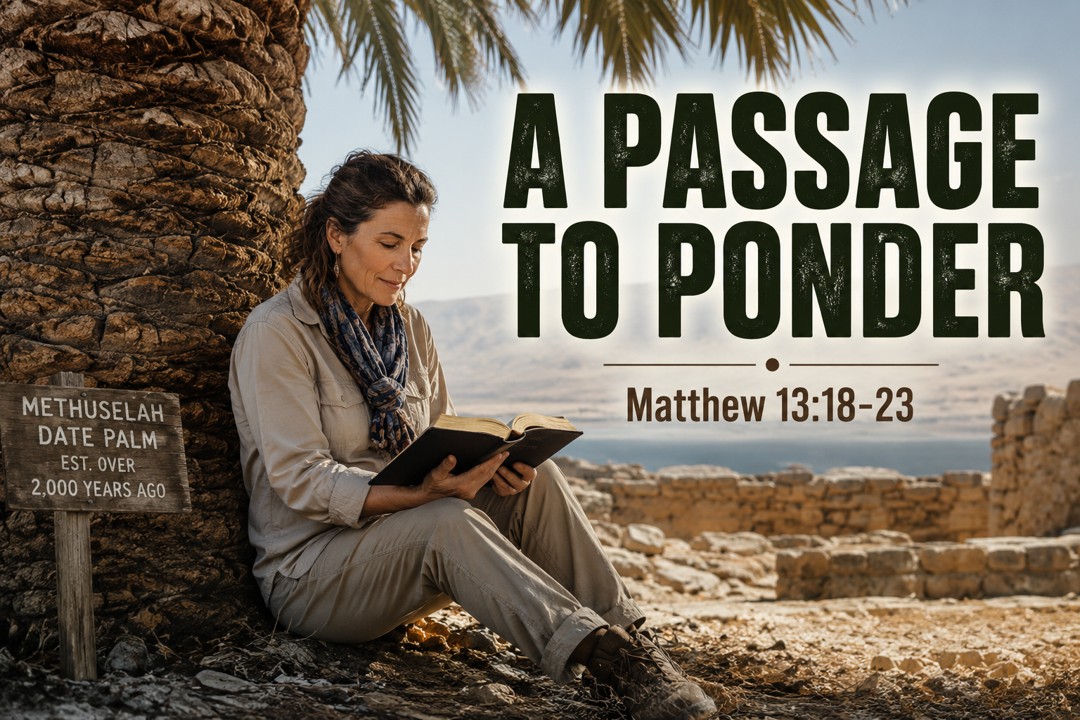
Can 2,000-year-old seeds still produce?
Israeli physician Sarah Sallon believed they could.
Ancient date palm seeds had been recovered from archaeological sites near the Dead Sea. Although the trees themselves had disappeared nearly 2,000 years ago, Sallon persuaded skeptical archaeologists to let her plant some of those ancient seeds. Many thought the idea was impossible.
Six weeks later, green shoots appeared. The first tree was named Methuselah. Since then, researchers have successfully grown several more trees from those long-buried seeds.
No wonder the Bible compares God’s Word to an imperishable seed.
In Matthew 13, Jesus tells one of His most familiar parables about the sower, the seed, and the soil (vv. 3-9). Then, in verses 18-23, He explains its meaning.
THE SOWER
The image of a sower scattering seed would have been familiar to His hearers. In the parable, Jesus is probably the sower. Yet it also represents every preacher, pastor, teacher, and Christian who shares the Word of God.
THE SEED
The seed is the Word of the Kingdom. Jesus plainly said, “The seed is the word of God” (Lk. 8:11). Peter reminds us that we are “born again…through the living and abiding word of God” (1 Pet. 1:23). God’s Word is incorruptible. It still has the power to produce spiritual life.
THE SOIL
The soil represents the heart of the hearer. Jesus describes four kinds of hearts.
1. The Wayside. The seed falls onto hard, compacted soil, where birds quickly devour it. Jesus says this represents Satan snatching away the Word. While the Devil is at work, the deeper problem is a heart that has become hardened and unreceptive.
2. The Stony Ground. This hearer receives the Word with joy but develops no roots. When trials and persecution come, faith quickly withers because it was never deeply grounded.
3. The Thorny Ground. Here the Word begins to grow but is choked by the cares of this world, the deceitfulness of riches, and the pleasures of life. A crowded heart cannot produce lasting fruit.
4. The Good Ground. This heart hears the Word, understands it, and bears fruit. Luke says it is an “honest and good heart” that patiently bears fruit.
PERSONAL APPLICATION
1. Do you have a Hard Heart?
Like the wayside soil, has your heart become hardened by sin, disappointment, or the influence of others? Solomon warned, “Above all else, guard your heart, for it is the wellspring of life” (Prov. 4:23). The Hebrew writer also cautions against the deceitfulness of sin hardening our hearts (Heb. 3:12-15).
Hearts, like soil, must be plowed and cultivated before they can receive the seed. If you know you need to obey the gospel, don’t harden your heart.
2. Do you have a Shallow Heart?
This is thin soil covering rock. The Word never takes deep root. It describes the emotional hearer who fails to count the cost of discipleship. Remove the rocks. Learn to endure hardship. Allow God’s Word to penetrate deeply into your heart, mind, and soul.
3. Do you have a Crowded Heart?
Have the weeds crowded out the seed? Material cares. The pursuit of wealth. Worldly pleasures. Even faithful Christians must guard against worldliness choking out the Word.
4. Do you have a Fruitful Heart?
The genuine believer bears fruit. For too long, churches have coddled members who produce little or no spiritual fruit.
Jesus teaches that the evidence of the heart is the fruit it produces. If your life is not bearing fruit, it’s time to take an honest look at your heart.
ONE FINAL THOUGHT
Don’t become discouraged when some reject the Word. Don’t become disillusioned when some Christians fall away. Don’t be disturbed that believers produce different amounts of fruit. Some will bear thirtyfold, some sixty, and some a hundred.
Our responsibility is simply to keep sowing the seed.
After all, if a 2,000-year-old date palm seed can still spring to life, how much more can God’s imperishable Word transform hearts today? Keep planting the seed. It is still living. It is still powerful. And it is still producing fruit.
—Ken Weliever, The Preacherman


Pingback: Weekly Recap: July 27-31 | ThePreachersWord