
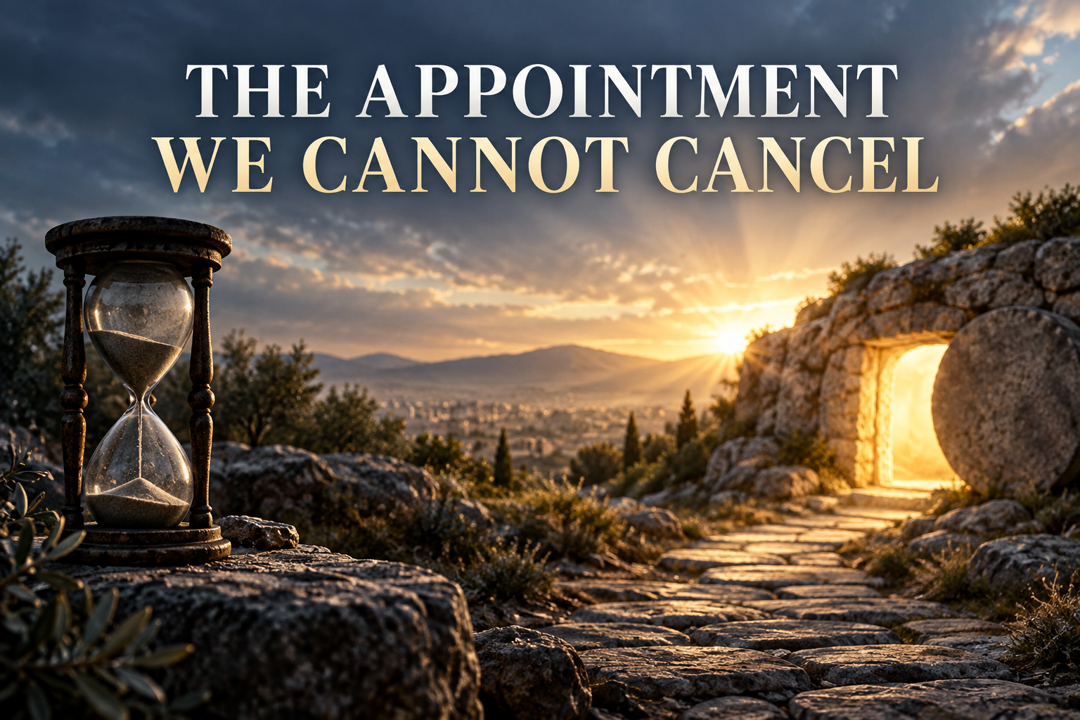
What would you give to live forever? How much would you spend to significantly delay death?
A recent Wall Street Journal article revealed that Russian President Vladimir Putin has become fascinated with technology designed to slow aging and extend human life. To this end, the Kremlin is backing a $26 billion initiative involving gene therapies and other research aimed at slowing cellular decline.
The article also reported that Putin and Chinese President Xi Jinping were overheard discussing the possibility of extending life—and perhaps achieving a kind of immortality—through organ replacement.
Whatever Putin’s personal motives, his pursuit reflects an ancient human desire—the longing to escape death.
However, the Bible offers a sobering reality check: “It is appointed for men to die once, but after this the judgment” (Heb. 9:27).
Likewise, the psalmist asked a rhetorical question that challenges everyone seeking to cheat death:
What man can live and not see death?
Can he deliver his life from the power of the grave?
(Ps. 89:48)
Young people intellectually know that death is a reality, but it often doesn’t seem real to them. As we grow older, however, we become increasingly aware that our time on earth is running out.
The late Sewell Hall addressed this concern in his book The Winter of Life. Observing the frailty of aging, Sewell wrote that “this awareness can be a source of terror or of calm anticipation, or of something in between. So much of it depends on faith.”
It is sad to witness the hopelessness of unbelief in the face of death. The noted 19th-century agnostic Robert G. Ingersoll expressed this despair in the eulogy he delivered at his brother’s grave in 1879:
“Life is a narrow vale between the cold and barren peaks of two eternities. We strive in vain to look beyond the heights. We cry aloud, and the only answer is the echo of our wailing cry.” Ingersoll ended with a faint appeal to hope, but he offered no solid foundation for it. The Christian possesses something far better than wishful thinking.
Our hope rests upon an empty tomb.
We believe in “the God of hope” (Rom. 15:13) and serve a risen Savior whose triumph over death provides a firm foundation for hope beyond the grave. Through Christ, we have been “begotten again to a living hope through the resurrection of Jesus Christ from the dead” (1 Pet. 1:3).
Consequently, we “do not sorrow as others who have no hope” (1 Thess. 4:13).
Denying the reality of death is unhealthy, affirmed gerontologist David L. Perry in his book Aging Gracefully. “Dealing with death and dying is healthy; denying or suppressing these realities is unhealthy.” Then Perry added, “In fact, denial creates the worst kind of ‘giant of despair’ in our lives.”
The certainty of death should not cause us to stop living. It should teach us how to live—and for whom to live.
Instead of spending our time, effort, energy, and resources denying or desperately attempting to delay death, we ought to invest our time in living.
Living for the Lord.
Living with purpose.
Living with passion.
Living to make a difference.
“Finish well” is the advice often offered by Christian authors writing about aging, death, and dying. Larry Swaim, in Growing Older in God’s Grace, wrote:
“We should consecrate ourselves to the good in life, which all comes from God, and should deliberately avoid the evil that plagues our lives. The call to those of us who are older is ‘GET READY!’ Make your calling and election sure. The finish line is in sight, and our best effort is required as we approach it.”
Indeed, as David observed, “There is but a step between me and death” (1 Sam. 20:3).
Since there is but a step between us and death, let us make every remaining step count for Christ.
—Ken Weliever, The Preacherman


It is wise to get ready, prepare your inner self, so that when the inevitable appointments of life arrive, you meet them with strength, clarity, and peace.
LikeLike
Pingback: Weekly Recap: September 14-18 | ThePreachersWord