
Growing up, I had good reason to loathe my father. He was abusive and struggled with addiction. He cycled in and out of jail, and that sent my family tumbling down the economic ladder,” wrote author and Wheaton College professor Esau McCaulley.
“Before he died when I was in my mid-30s, I realized that my sense of my own righteousness had callused into something cruel,” McCaulley admitted.
“I didn’t want him to change, because his poor behavior formed a central part of my identity. He left his family; I built one. He was addicted to drugs; I barely drank alcohol. As long as I compared myself with him in this way, I needed his brokenness to provide direction. I was not running toward the good; I was fleeing him.”
However, he was confronted with an identity crisis the day his father apologized to him. Here’s his recollection of that occasion:
“We hadn’t spoken in years but were now reunited at my sister’s wedding. During a lull in the rehearsal, I asked him the questions that had been with me my whole life: ‘Why did you leave, and why did you stay away?’ He replied, ‘Son, I don’t rightly know. After I left, I saw that you all were doing better without me, so I stayed away. I’m sorry.’”
In retrospect, McCaulley offered this very personal and transparent reflection:
“What shocked me most was how difficult it was to accept this new version of him, even as he tried to make amends. Who was I if I wasn’t a person with a wicked father?”
As a result, this Bible professor and theologian, who had taught others for years about God’s grace, mercy, and forgiveness, found himself facing a reality that was difficult to accept. He said, “Forgiving my father forced me to create a positive, and not merely a reactive, vision of my life.”
Ultimately, he concluded that “It also taught the valuable lesson that not all lost causes are irredeemably lost.”
McCaulley’s painful honesty reminds us of three important points.
#1 Forgiveness is hard.
It’s one thing to teach and preach about forgiveness; it’s quite another to practice it. People, especially those close to us, can hurt us in ways that cut deeply, wound our souls, and leave scars that remind us of past offenses.
Yet knowing this difficulty, Jesus commanded, “Forgive others for their transgressions.”
Sometimes forgiveness is not accomplished in a single moment, but through a long process of surrendering our hurt to God.
Indeed, C. S. Lewis was right when he wrote, “Everyone says forgiveness is a lovely idea, until they have something to forgive.”
#2 Forgiveness forces us to confront who we are.
One compelling lesson from McCaulley’s story was that his life, success, and even identity were connected to his father’s past sins.
Like him, we may secretly resist another person’s change because their failures make us feel better about ourselves. Attitudes of pride, superiority, and self-righteousness can quietly creep into our hearts as we compare ourselves to the one who hurt us.
2 Corinthians 10:12 explicitly states that those who measure themselves by one another and compare themselves to others are “not wise.”
Furthermore, forgiveness is difficult because it requires us to let go of feelings and attitudes we’ve become comfortable with. Bible commentator John R. W. Stott mirrored this thought when he wrote, “Forgiveness is costly because it demands that we give up something — our right to revenge, our bitterness, our self-pity.”
#3 Forgiveness humbles us and reminds us of our own need.
While our sins may not appear as outwardly destructive as another person’s transgressions, the truth is “all have sinned and fallen short of the glory of God” (Rom. 3:23).
While the consequences of sins differ greatly, all sin separates us from God and reveals our need for grace. Harboring feelings of bitterness, anger, pride, and self-righteousness is just as wrong in God’s sight as actions of abuse, addiction, and neglect.
Jesus further reminds us of the importance of forgiving others with these sobering words:
“For if you forgive others for their transgressions, your heavenly Father will also forgive you. But if you do not forgive others, then your Father will not forgive your transgressions” (Matt. 6:14-15).
In the words of George Herbert, “He who cannot forgive others breaks the bridge over which he himself must pass.”
McCaulley’s story is another reminder that Jesus’ command is one of the most challenging in Scripture. Yet obeying it is one of the most rewarding, not only in this life, but in the life to come.
Someone in your life may need your forgiveness today. And perhaps you need someone else’s forgiveness as well.
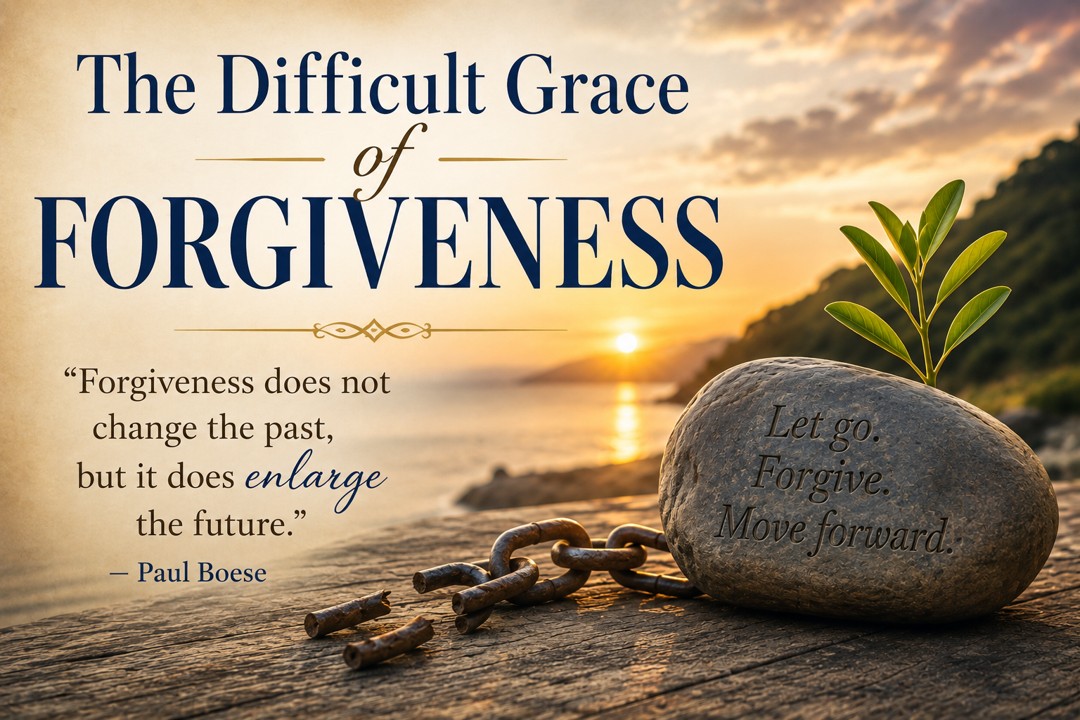
Remember this observation from Paul Boese: “Forgiveness does not change the past, but it does enlarge the future.”
—Ken Weliever, The Preacherman


I would like more information or a possible conclusion to a discussion.
LikeLike
Pingback: Weekly Recap: May 11-15 | ThePreachersWord