
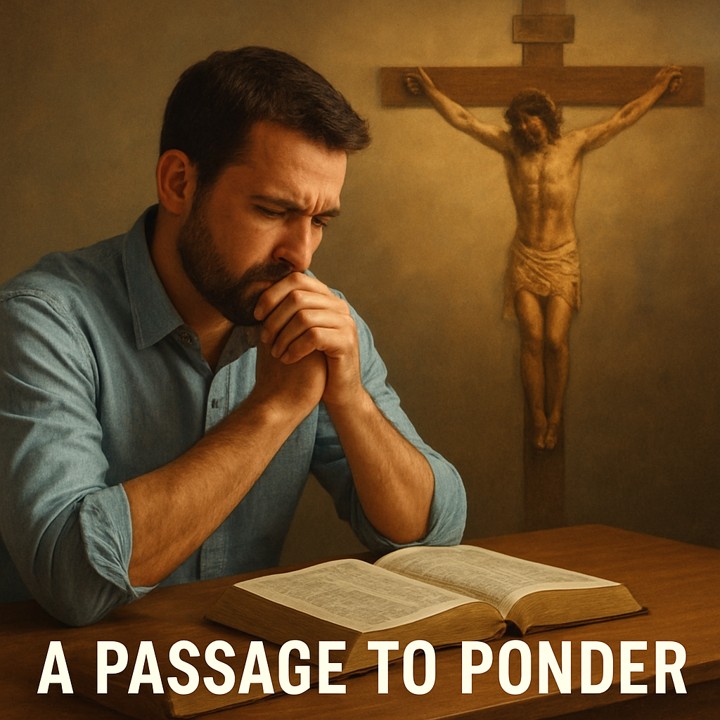
Sin.
Sin is a crushing debt that’s impossible to repay.
Sin is drowning in the ocean with no hope of rescue.
Sin is filth that soap cannot scrub away.
Sin is a cancer spreading with no remedy for a cure.
Sin is poison sweetened with honey, tasty at first, but deadly in the end.
The Bible treats sin seriously. “Sin,” wrote Dallas Willard, “is not first of all a list of bad deeds. It is a condition of the soul.” It’s a condition that hurts others, poisons the heart, and separates us from God.
Our passage today, however, offers help and hope from the burden, bondage, and blame of sin. In just four words, everything has changed.
“In Him we have redemption through His blood, the forgiveness of sins, according to the riches of His grace” (Eph. 1:7).
1. Redemption – From Captivity to Freedom
In Bible times, redemption referred to the ransom of a slave or a prisoner of war. A wealthy benefactor would purchase their freedom and end their captivity.
Spiritually, that’s what Jesus has done for us. He’s paid the price. He’s bought our freedom from sin. We can be restored to a relationship with God. We’ve been released from Satan’s chains that shackled us.
Be advised, as John R. W. Stott expressed it, “Redemption is not God helping us do better, but God rescuing us when we cannot help ourselves.”
Redemption, however, raises the question—” What was the price?”
2. Blood – The Price That Was Paid
Our culture is uncomfortable with the picture of Jesus’s cruel death on the cross. We wince at the brutality of it. If you’ve ever seen Mel Gibson’s “The Passion of the Christ,” you know it’s hard to watch the crucifixion scene.
Yet, as one writer acknowledged, “Scripture never sanitizes the cost of salvation.”
The sinless blood of Jesus Christ was the price paid to secure our salvation from sin. He died in our place. We admire those who’ve given their lives to protect our freedom in this country. But Jesus did something infinitely greater. He shed his blood for friends and foe alike. Not to secure political liberty, but to secure us a heavenly home with the Father. Love, not duty, sent Him to the cross. To paraphrase N. T. Wright, “The blood of Christ shows us not the violence of God, but the costliness of His love.”
3. Forgiveness – More Than a Feeling
To be forgiven is to be released, as a prisoner freed from jail. It speaks of the cancellation of a debt. It is a legal term dismissing all charges and consequences for our actions.
Forgiveness does more than make us better. It’s something God does for us to change our spiritual status. Forgiveness does not minimize sin; it removes sin. The penalty for its infringement has been removed. And God sees forgiveness of sins as “blotting them out and remembering them no more” (Isa. 43:25).
You don’t have to wonder if you’re forgiven. You are. God says so.
4. Grace – The Source of It All
Colly Caldwell suggested that the phrase “the riches of His grace” might be rendered the: Wealth of His charity. Then he adds:
“The great opulence of God’s affluence is freely and willingly shared with us even when our captivity has resulted from our own stupid, inane negligence and disobedience. His mercy makes possible our release when He had no complicity in our plight.”
Grace–unearned, undeserved, unmerited, unmeasured–it’s God’s Divine gift to sinful people. Like me. And like you. The “riches of His grace” flow from the depth of His immeasurable love.
As ugly, hurtful, and deadly as sin is, we have been redeemed by His blood, forgiven of our sins, restored to a relationship with God, all because of His amazing grace.
“Thanks be to God for His indescribable gift!” (2 Cor. 9:15)
–Ken Weliever, The Preacherman
 ThePreachersWord
Pingback: Weekly Recap: January 25-30 | ThePreachersWord