
It was on this date, December 10, 1896, that Alfred Nobel died. Exactly five years to the day, the first Nobel prizes were award in Stockholm, Sweden, in the fields of physics, chemistry, medicine, literature and peace.
In his will, Nobel directed that the bulk of his vast fortune be placed in a fund in which the interest would be “annually distributed in the form of prizes to those who, during the preceding year, shall have conferred the greatest benefit on mankind.”
However, as the late Paul Harvey used to say, here’s the rest of the story.
One morning in April of 1888 Alfred Nobel, who was the inventor of dynamite, woke up to read his own obituary.
His brother, Ludvig, had died. But a newspaper reporter mistakenly thought it was Alfred and carelessly reported the death of the wrong brother! Anyone would be disturbed under those circumstances to read their own obituary. However, the headline was even more disconcerting to Nobel. It read:
“The Merchant of Death is Dead.”
The article called him “The Dynamite King” and stated: “Dr. Alfred Nobel, who became rich by finding ways to kill more people faster than ever before, died yesterday.”
Alfred Nobel was horrified and overwhelmed. For the first time this great inventor and industrialist who amassed an immense fortune from explosives saw himself as the world saw him–“The Dynamite King. Nobel did not want to be remembered as “the merchant of death,” so he resolved to do something about it.
On November 27, 1895, Alfred Nobel signed his final will and testament at the Swedish-Norwegian Club in Paris to have his vast wealth equally distributed for the five prizes. ” Just before his death, Nobel confided in a friend, “I want to be remembered for peace, not destruction.”
When Alfred Nobel actually died he held 355 patents, had built companies and laboratories in over 20 countries and left a nine million dollar endowment fund to award the prizes. Nobel literally changed his legacy. Today we remember him for the Nobel peace prize.
While most of us will not leave behind inventions, world-wide success or a 9 million dollars endowment, we are leaving a legacy.
Consider the legacy left by some of God’s greats.
- King David is remembered as “a man after God’s own heart.”
- Abraham is known as the “Father of Faith” and the Friend of God.”
- Esther is esteemed as the beautiful, but courageous Queen who rose to the occasion, “for such a time as this” to save her people from annihilation,
- The great leader of Israel, Moses, is identified as “the meekest man in all the earth.”
- Job is pictured as a man of great patience.
- Paul’s legacy was changed from a persecutor to a preacher and writer of epistles.
- John is called “the apostle of love.”
- Barnabas is known as the encourager.
- An unknown, unnamed man in Jesus’ parable is forever remembered as “The Good Samaritan.”
- And the legacy of Jesus of Nazareth is summarized in several single words–Savior, Redeemer, Messiah, King, Deliverer, and Lord.
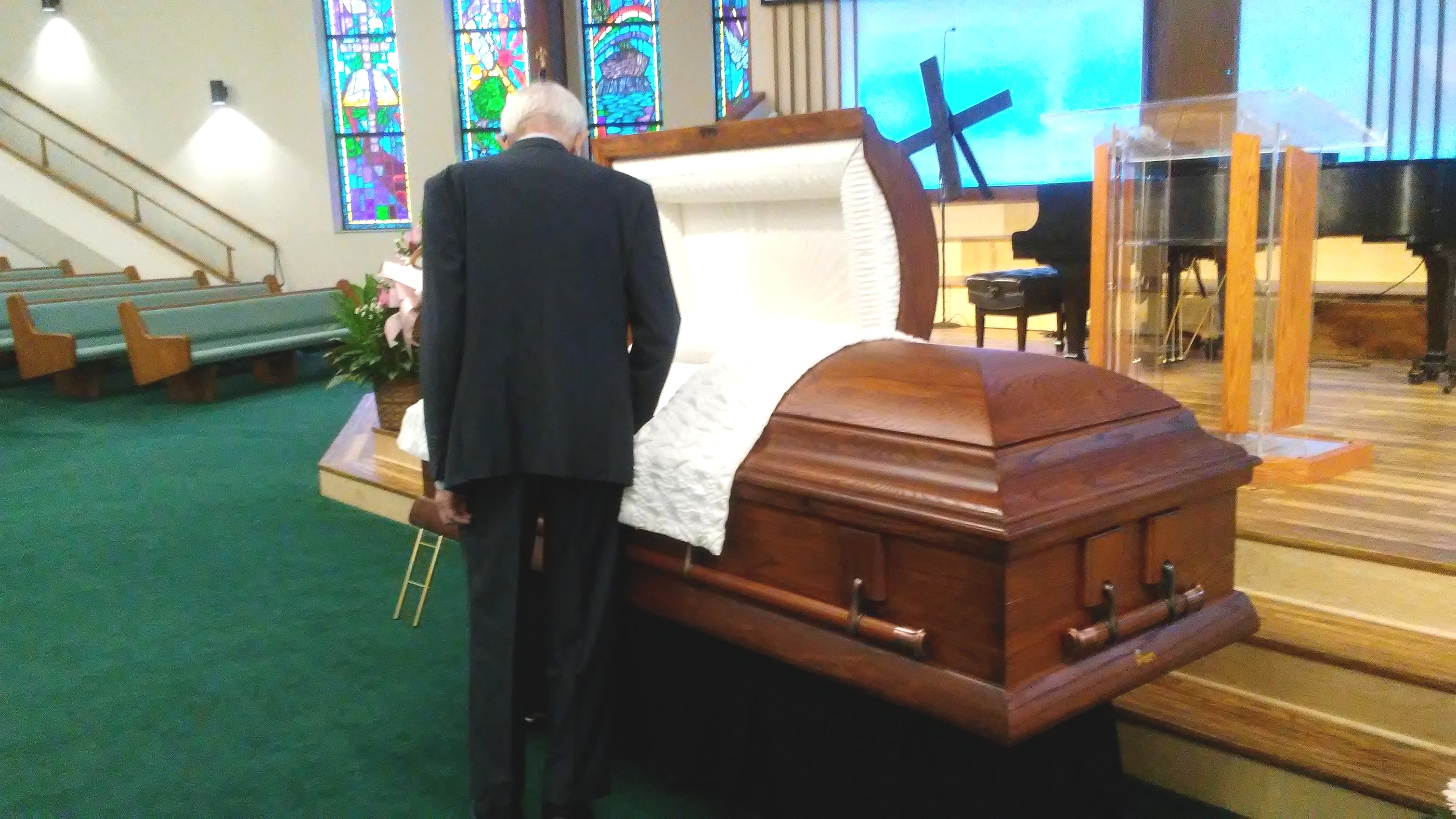
We are returning home from attending the funeral of my Uncle, David Key. He’s left a legacy of love, joy, generosity, servanthood, and Christian faithfulness.
How will you be remembered? What kind of reputation are you building? What legacy are you leaving?
It’s possible to live under a delusion. To think you’re kind when you’re really inconsiderate. To think you’re gracious, when your personality is actually grating. To think you’re generous, when others regard you as cheap. To believe you are loved, when you are merely tolerated.
The wise man wrote, “A good name is to be chosen rather than great riches, and favor is better than silver or gold” (Prov 22:1).
Alfred Nobel said, “Every man ought to have the chance to correct his eulogy in midstream and write a new one.”
When the time comes and people gather to mourn your death, how will your eulogy read? What will your legacy be?
–Ken Weliever, The Preacherman
 ThePreachersWord
I heard someone say recently that a study was done that showed the most productive years for “kingdom” work are your 60’s. Followed by your 70’s and then in third place was your 50’s. At first that seems incredulous, but I have found it and have seen it to be true. There are of course some assumptions and conditions related to this general statement, but if health allows in your 60’s you have accumulated much in wisdom, discernment, life experience, resources [financial and friends] to be so effective for God’s business unless you choose to completely retire and coast to the finish. Good thoughts Ken.
LikeLike