
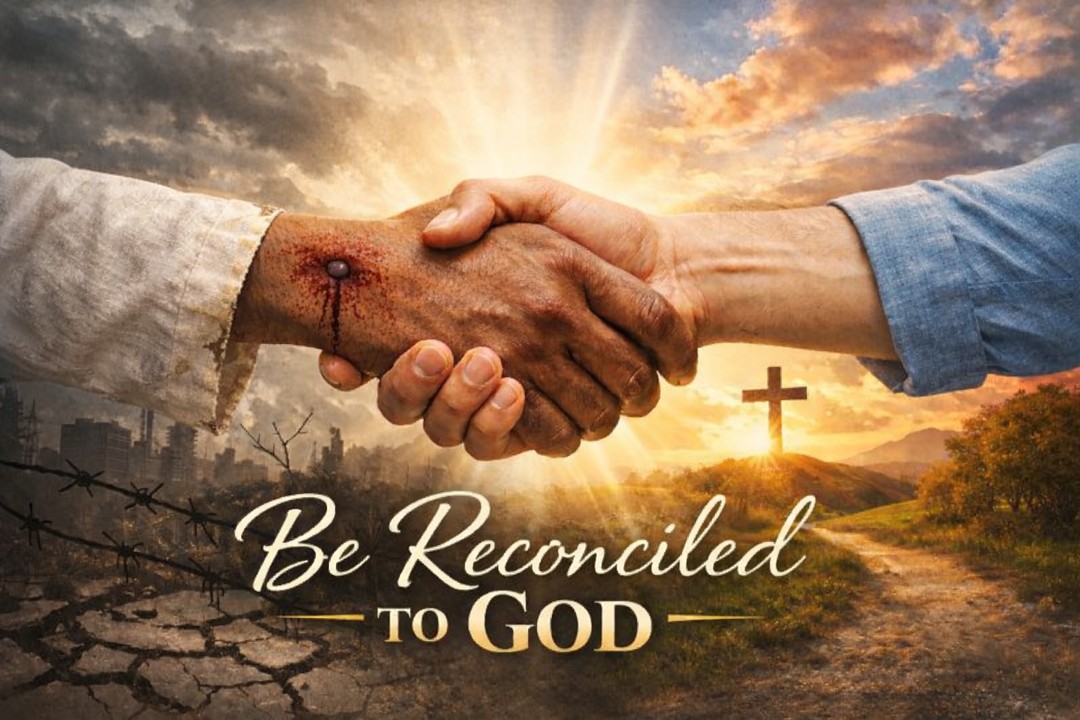
He was called by one reporter “a walking billboard for reconciliation.”
Douglas “Pete” Peterson served as a U.S. Air Force captain during the Vietnam War and was shot down during a bombing raid near Hanoi in 1966. For six and a half years, he was held as a prisoner of war. He was humiliated. Beaten. Abused.
Yet Peterson returned 22 years later, after the fall of Saigon, to become the U.S. ambassador to Vietnam. He chose to return to Vietnam to make a difference in the lives of children. Peterson realized that God saved his life as a POW not to live in anger, bitterness, and retribution, but to find peace, harmony, and restoration.
The world today is in dire need of reconciliation.
Ruptured relationships need reconciliation. Broken homes and marriages cry out for reconciliation. Opposing political factions could benefit from reconciliation. But most of all, people need to be reconciled with God.
The apostle Paul’s ministry and message were ones of reconciliation. To the Corinthians, he issued this entreaty:
“Now all things are of God, who has reconciled us to Himself through Jesus Christ, and has given us the ministry of reconciliation, that is, that God was in Christ reconciling the world to Himself, not imputing their trespasses to them, and has committed to us the word of reconciliation. Therefore, we are ambassadors for Christ, God making His appeal through us. We implore you on behalf of Christ, be reconciled to God” (2 Cor. 5:18–20).
To be reconciled is “to change from enmity to friendship,” writes W. E. Vine. Regarding the relationship between God and man, he explains that “reconciliation” is primarily what God accomplishes, exercising His grace toward sinful man on the ground of the death of Christ in a propitiatory sacrifice under the judgment due to sin.
Paul expressed it this way in Romans 5:8–11:
“But God demonstrates His own love toward us, in that while we were still sinners, Christ died for us. Much more than having now been justified by His blood, we shall be saved from wrath through Him. For if, when we were enemies, we were reconciled to God through the death of His Son, much more, having been reconciled, we shall be saved by His life. And not only that, but we also rejoice in God through our Lord Jesus Christ, through whom we have now received the reconciliation.”
While the concept of reconciliation is rich with deep theological implications, there are some simple truths with practical application in our lives.
(1) All have sinned. Every accountable person has violated God’s law. None can boast sinless perfection. As the Bible says, “there is none righteous, no, not one” (Rom. 3:10).
(2) Sin separates us from God. God is holy, sinless, and perfect. Thus, sinful mankind is not worthy to dwell in His presence. Our transgressions have estranged us from the Holy One. Sin alienates us from God and makes us His enemies (Isa. 59:1–2; Eph. 2:1–10).
(3) By the grace of God, the means of reconciliation have been provided. Our Creator seeks communion and community with the human race. He desires that we be in a covenant relationship with Him. So by His grace, mercy, and love, He provided a way for us to be reconciled to Him.
(4) Reconciliation is realized in the cross of Christ. Jesus died so our fellowship with God could be restored. The cross provided the means of reconciliation. Through the blood of the sinless Savior, we can be cleansed from sin (Col. 1:19–20).
(5) The gospel reveals God’s plan for reconciliation. We cannot be reunited with God on our own terms or by our own methods. He sets the conditions and has already determined the means by which we receive redemption (Mk. 16:15–16; Acts 2:38; Rom. 6:1–6).
(6) Peace is the product of reconciliation. When our union with God is restored, we enjoy spiritual tranquility. We can find peace with God, with our fellow man, and within ourselves. Indeed, all is right with the world.
You don’t have to be estranged from God or bereft of His blessings. The gospel call continues:
“Be reconciled to God.”
—Ken Weliever, The Preacherman
 ThePreachersWord
Pingback: Weekly Recap: March 9-13 | ThePreachersWord