
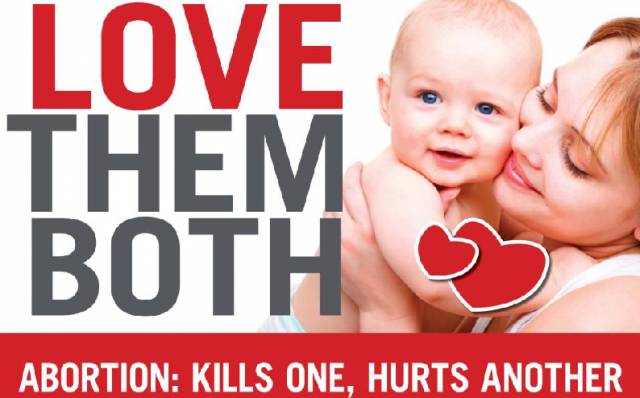
“I was 29, I was living in Seattle, I was in graduate school, I was dating someone… It was never a question. I got pregnant, and I was like, ‘Well, alright, I guess I’m having an abortion,’” relates Amelia Bonow in a matter-of-fact fashion.
Today marks the 43rd anniversary of Roe v. Wade, and abortion activists are working harder than ever to push back against the pro-life movement and to make abortion seem like a simple, normal, rational decision that any woman would make.
Time magazine tells the story of Bonow, a leader in the online grassroots campaign #ShoutYourAbortion. She is encouraging ordinary women to discuss their abortions publicly. Bonow wants women to “fight back” against what she calls a “culture of fear” created by those opposed to abortion.
“I think that we’re seeing an enormous outpouring of women willing to talk about their own abortion stories, because they’ve realized that with the upcoming Supreme Court case, the future of reproductive protections is at stake,” says Nancy Northup, president of the Center for Reproductive Rights, which has supported at least one of these campaigns. “We’re not going to lose our rights because you’re trying to bully and shame us into silence; we’re not going to do that anymore.”
The case Northup is referring to is Whole Woman’s Health v. Cole. Because of numerous restrictions enacted at the state level over the past 43 years—restrictions intended to protect both women and unborn children—abortion advocates are claiming these laws constitute an “undue burden”. They are seeking to have them ruled unconstitutional. The Supreme Court will hear this case on March 2.
#ShoutYourAbortion is not alone. Similar groups are promoting the idea that women should share their stories to make abortion seem like a standard medical procedure. The abortion industry is also releasing a series of videos performed by seven actresses portraying women who’ve had abortions.
The series, Draw the Line Monologues, is produced by the Center for Reproductive Rights. In it, Elizabeth Banks, Amy Brenneman, Mercedes Mason, Mary McCormack, Dascha Polanco, Retta, and Bellamy Young perform video vignettes which, according to a press release, are “inspired by stories submitted by American women about access to abortion care.”
In a further development, 113 prominent female attorneys filed an amicus brief with the U.S. Supreme Court in January, stating that they “would not have been able to achieve the personal or professional successes they have achieved were it not for their ability to obtain safe and legal abortions.”
One anonymous lawyer wrote, “To the world, I am an attorney who had an abortion, and to myself, I am an attorney because I had an abortion.”
Among the signers were law professors, public defenders, and even a former justice of the New York State Supreme Court. Elected officials such as Ohio State Representative Teresa Fedor, former Nevada State Representative Lucy Flores, and former Texas Senator Wendy Davis also filed a similar brief describing their personal experiences with abortion.
These are misguided attempts to justify sinful behavior, soothe the consciences of women who’ve had abortions, and silence Bible believers who stand opposed to this shameful blight on our nation’s history. In the past 43 years, according to the National Right to Life organization, more than 58 million unborn children have lost their lives.
These efforts remind me of a passage in Jeremiah describing the brazen attitude God’s people once had toward sin some 600 years before Christ:
“Were they ashamed when they committed abomination?
No, they were not at all ashamed;
They did not know how to blush.
Therefore, they shall fall among the fallen.
when I punish them, they shall be overthrown,”
says the Lord (Jer. 8:12, ESV).
Bible believers affirm that life begins at conception. Scripture uses the expression “with child” 26 times to refer to pregnant women. The term fetus is never used.
Luke, the physician, records that Elizabeth, the mother of John the Immerser, conceived a son (1:35). In verse 41, Luke writes that “the baby leaped in her womb.” The baby! Not the fetus. It is the same Greek word Luke uses to describe Jesus after His birth (2:12, 16). God views the unborn baby and the newborn baby in the same way—both are living human beings.
In the midst of his suffering, Job cries out, “Or why was I not hidden like a stillborn child, like infants who never saw light?” (Job 3:16). The unborn child is called an infant.
Instead of glorifying sinful behavior and participating in the killing of the unborn, these women should repent of their sins, seek God’s forgiveness, and revive the God-consciousness buried deep within their souls.
Footnote:
In 2022, the U.S. Supreme Court’s decision in Dobbs v. Jackson Women’s Health Organization overturned Roe v. Wade, returning abortion policy to the states. While many states enacted laws to protect unborn life, abortion advocates responded by expanding access through medication abortions, telehealth, and out-of-state travel. From a biblical perspective, Dobbs did not resolve the moral issue of abortion; it merely shifted the battleground. Scripture affirms the sanctity of human life from conception, and the continued normalization of abortion—now often hidden behind technology and distance—underscores the ongoing need for moral clarity, repentance, and compassion rooted in God’s truth (Ps. 139:13–16; Jer. 1:5).
–Ken Weliever, The Preacherman
(Editor’s Note: This post originally appeared in January 2016 and is being reblogged this week while I focus on some special sermon preparation. Though written 10 years ago, its message remains timeless, and the battle to uphold and respect the sanctity of life continues. BTW, these original posts have been edited by Grammarly and ChatGPT. #2016)
 ThePreachersWord
Pingback: Weekly Recap: January 18-23 | ThePreachersWord