
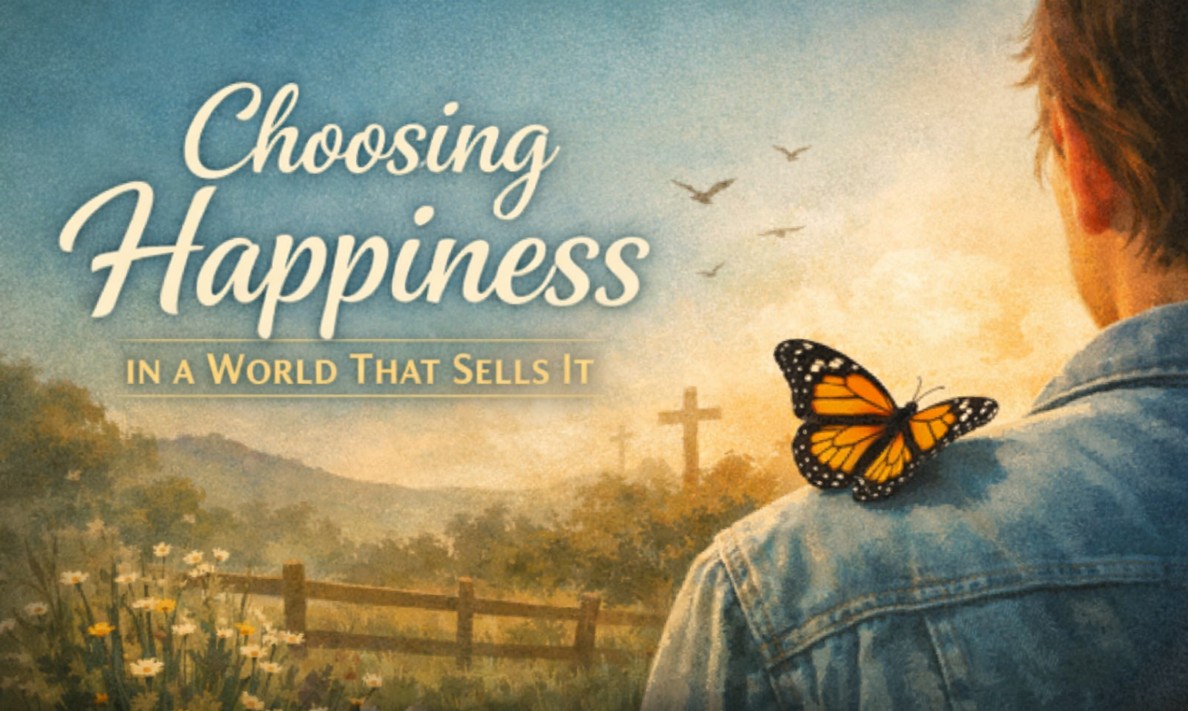
Abraham Lincoln once observed, “Most people are about as happy as they choose to be.” That insight is striking when you consider the source.
Lincoln was no stranger to grief, failure, depression, and disappointment. Few leaders have carried heavier personal and national burdens, yet he understood something timeless about happiness: it is less about circumstances and more about choice.
Our world is still relentlessly chasing happiness. Advertisers promise it can be purchased—if only we buy the right toothpaste, wear the right clothes, drive the right car, or escape to the right destination. The message hasn’t changed much over the years; it has only gone digital and louder.
Several years ago, the Winnebago Mental Health Institute in Oshkosh, Wisconsin, warned of what its director, Dr. Darold Treffert, called the great “American Fairy Tale.” One of its central themes is that more possessions equal more happiness. Yet Jesus offered a sobering correction: “One’s life does not consist in the abundance of his possessions” (Luke 12:15).
Others search for happiness in improved circumstances—a new job, a bigger house, or even a different spouse. But as Robert J. Hastings wisely noted, “Places and circumstances never guarantee happiness. You must decide within yourself whether you want to be happy.” The apostle Paul echoed that truth centuries earlier. He wrote that he had known abundance and need, highs and lows, yet he had learned to be content in every circumstance (Philippians 4:11–12). Contentment, it turns out, is a discipline, not a destination.
In fact, happiness is best understood as a byproduct, not a goal. When we focus on personal growth, invest our lives in others, and serve God with heart, soul, and mind, something more profound emerges—inner joy, peace of mind, and contentment of spirit. Happiness has often been compared to a butterfly. Chase it relentlessly, and it flutters just beyond reach. But turn your attention elsewhere, and it may quietly settle on your shoulder.
Jerry L. Walls once wrote, “In our age, as in every age, people are longing for happiness, not realizing that what they are looking for is holiness.” That idea runs counter to our culture, which insists that life is about feeling good rather than being good. Worldly pleasures are often marketed as the gateway to happiness, but hopping from bed to bed or bar to bar rarely produces lasting joy. More often, it leaves a trail of emptiness and regret. Jesus pointed us in a different direction: “Blessed are the pure in heart, for they shall see God” (Matthew 5:8). When we experience God’s blessing, happiness follows.
Ultimately, the key to happiness is found in Jesus’ summary of life itself—the two great commandments: “You shall love the Lord your God with all your heart, with all your soul, and with all your mind… and you shall love your neighbor as yourself” (Matthew 22:37–39). These speak directly to the deepest needs of every human being: a sense of worth, meaningful relationships, and a close relationship with God.
So today—regardless of your circumstances—choose happiness, not by chasing it, but by choosing faithfulness, love, and purpose. And quite unexpectedly, happiness will rest on your shoulder, warm your heart, and bring a quiet smile to your face.
— Ken Weliever, The Preacherman
 ThePreachersWord
Pingback: Weekly Recap: January 12-16 | ThePreachersWord