
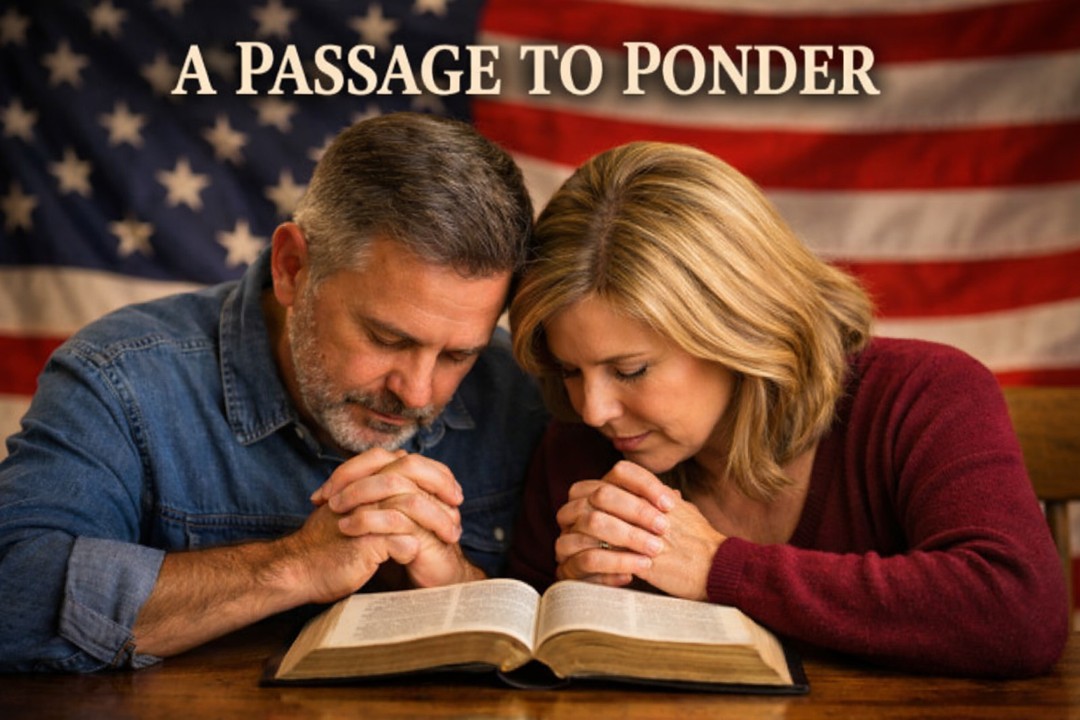
Massive plans are already in the works to celebrate the 250th anniversary of America’s founding. From Washington, D.C., to the birthplace of the Declaration of Independence and across every state to California, there will be parades, parties, and fireworks.
New York City will feature a unique countdown in Times Square with the ball drop for the first time outside of New Year’s Eve.
The America250Commission seeks not only to honor America by celebrating its past but also to bring people together by reminding them of our foundation, shared values, and future aspirations.
If you’re following the Five-Day Bible reading program, this week you’re reading Psalm 11. It raises some questions and provides some answers that are still relevant 3,000 years later, especially as we approach our 250th birthday.
What the Enemy Does?
The Psalmist, David, is aware of Israel’s enemies. “The wicked bend their bow,” may have been literal, or it may be metaphorical, referring to their schemes to attack God’s people.
Today, not only does America have enemies, but God’s people do, too. Sadly, some of our enemies are within our country and even in leadership positions. Our foundations feel fragile. The moral clarity regarding the sanctity of life, the purity of the marriage bond, and respect for God and His Word has been blurred. Truth is no longer absolute. Relativism and secularism have become the immoral guides for many of our citizens.
Of course, the real enemy is Satan. He’s cunning and crafty. He’s looking to destroy us. As Paul wrote, we must not be ignorant of his devices (2 Cor. 2:11). We must be awake, alert, and vigilant to thwart his wily schemes.
What can the Righteous Do?
Some people ignore our problems and do nothing. Others wring their hands and worry. Others seek to make a difference through political activism. Too many focus on the negatives and constantly talk about our problems, but engage in nothing positive or seek solutions.
#1. Pray without ceasing (1 Thess. 5:17)
Let’s pray for peace. For hurting hearts. For grieving fathers and mothers. For our leaders. For the sick and suffering. For our nation, whose soul is wounded.
Let’s pray for people we know. For our families. For our friends. For our brethren. For our own spiritual strength. For our community, state, and national leaders.
#2. Speak the Truth in love (Eph. 4:15-16)
Preachers, pastors, parents, and all Christians cannot remain silent about the critical issues of our day. However, we need to come to grips with two things. One, what the essential problems are, and two, how to respond.
Be advised that the critical issues are spiritual, moral, and ethical. They are not every little personal opinion we cherish. And believe it or not, they are neither political nor economic. The issues are of eternal significance that impact the soul.
However, even if we may not see all issues the same way, let’s speak, write, and post on social media with kindness, courtesy, and love. Remember, the Bible says, “love is not rude…nor does it cherish inflated ideas of its own importance” (1 Cor. 13:4-6).
#3 Don’t compromise or retreat from culture.
There’s a temptation for us to imitate those around us. So, there are many Scriptural warnings about remaining pure in a polluted world. “Be not conformed to this world,” Paul implores. I like the J. B. Phillips rendering, “Don’t let the world squeeze you into its own mold.”
However, another incorrect response is to isolate ourselves from culture. To withdraw. Or to ignore the world. That’s neither practical nor what the Lord desires.
Instead, we are called to influence the world. We are to be “the light of the world,” and “the salt of the earth.” We can make a positive impact in our community, in the workplace, in our various associations, and in all our relationships by being like Christ in our attitudes and actions
#4 Do good.
The world would be a better place if we all decided just to “do good.” The Bible issues this two-word exhortation 34 times. The Psalmist penned “Depart from evil and do good” (Ps 34:14). Jesus said that even when people are spiteful, hate us, and hurt us, we should “do good” to them (Matt. 5:44). And Paul exhorted, “As we have opportunity, let us do good to all people…” (Gal. 6:10).
Instead of bemoaning, “What’s the world coming to?” let’s boldly proclaim, “Look, what’s coming to the world.”
What the Lord is Doing?
David realized that the Lord was not oblivious to their plight. Nor should we be. God is on His throne. He rules. Reigns. And executes righteous judgment. He knows our problems. He sees our perilous condition. He feels our pain. And, in His time, He will make all things right.
In the midst of our celebration and on the eve of our 250th birthday, our attitude needs to be like David’s. In the Lord I put my trust. In the Lord I take my refuge.
–Ken Weliever, The Preacherman
 ThePreachersWord
Pingback: Weekly Recap: January 12-16 | ThePreachersWord