
(Note: We’re resuming our countdown of the 10 posts with the most hits in 2025, regardless of the year they were published. Today’s post is a March 2019 post that ranks #6.)
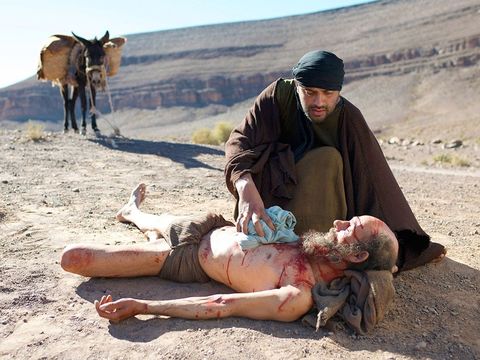
This morning, I was reading Jesus’ parable of The Good Samaritan in Luke 10.
This parable has been analyzed, allegorized, and sermonized, but not often enough actualized in our lives.
Good Samaritan has become synonymous with a charitable person who helps others, especially strangers. However, this feel-good story involves some elements that are not so nice.
The parable was in response to a Jewish religious leader who was testing Jesus and trying to trap him.
“What shall I do to inherit eternal life? he questioned
“What is written in the law? Jesus asked
The lawyer’s reply was the two great commandments to love God and love your neighbor.
“You’ve answered correctly, do this, and you will live,” Jesus acknowledged.
But that was not good enough. Further seeking to ensnare Jesus and justify himself, the lawyer asked, “Who is my neighbor?”
The parable has characters that are often overlooked.
(1) The Hurt Man
He was traveling a treacherous road from Jerusalem to Jericho. This 17-mile stretch drops 3300 feet in elevation. It was virtually uninhabited. Marked by cliffs and gullies on each side of the road. Thieves often took advantage of unsuspecting travelers. In Bible times, it was called “the path of blood.” Good judgment suggests you don’t travel this road alone. But he did. As a result, was beaten, bloodied, and left dying on the side of the road.
Many are suffering today. They are either hurting physically, mentally, or emotionally. The road is littered with abandoned children. Abused women. The homeless. Handicapped. And others with addictions. It’s a reality we don’t like to think about.
(2) The Hurting Man
The second person in the parable is the man or men who inflicted the hurt. Those with no concern for the rights and property of others. They are selfish. Cruel. And calloused.
Like the thieves in the story, there are those today who rob and intentionally hurt others. They seek gain at the expense of others, maybe not by literally stealing, but through dishonesty and duplicity.
Some hurt others with gossip, reckless innuendo, and unfounded, slanderous accusations. Husbands and wives can hurt one another with thoughtless actions, angry outbursts, or sarcastic digs.
(3) The Heedless Man
The Priest saw the wounded man, but was inattentive. He passed by on the other side. Maybe the man was dead. He didn’t know. But touching him would make the Priest unclean according to the law. And unable to serve. Or possibly it was a trick. And an accomplice was waiting to rob him. So, he decided not to be bothered or get involved.
How often are we like the Priest? Busy. Going somewhere. Preoccupied with our schedule. We don’t have time to be bothered. We know we ought “to do good to all people.” But not now. Not today. Maybe later.
(4) The Heartless Man
The Levite was worse than the priest. He stopped. Walked over. Looked at the bruised and bleeding man. Then passed on. What was he thinking? Feeling? Wondering? We don’t know.
But we do know there is too much insensitivity in the world today toward others’ needs. Indifferent people. Uncaring. And apathetic.
(5) The Helping Man
The Good Samaritan is the hero in Jesus’ story. The Bible says he felt “compassion” for the wounded stranger. He knew what needed to be done. And did it. His actions represented a sacrifice of time and money. Not to mention the possible risk to his personal safety.
Interestingly, Jesus uses a Samaritan as the good guy in the story. Samaritans were hated by the Jews as a half-breed race. But the one despised by others came to rescue and render loving aid.
Now, which man am I?
It’s easy to be thankful we’re not suffering hurt. Or to self-righteously feel good about ourselves, that we’re not hurting others. But are there times when we are heedless regarding the hurts of others? Or worse yet, heartless?
This parable stands as a timeless example of applying the Scripture “Love your neighbor as yourself.” It challenges us to reach out beyond our circle of friends and fellow Christians. To get outside our comfort zone. It’s a call to show mercy to the unfortunate lying beside the Jericho road of life. It’s a cry to “do good to all people, especially to those who belong to the family of believers” (Gal. 6:10).
“You be the Good Samaritan,” pleads Jesus. Open your heart. Give your time. Share your resources.
“Go and do likewise.”
 ThePreachersWord