

Energetic. Intense. Passionate. Zealous. On fire for God. These are some of the descriptions of Josiah, the King of Judah, who reigned from 640-609 B.C.
You read about Josiah’s life in 2 Kings 23:1-25 and 2 Chronicles 34-35, from which we can learn several lessons about spiritual zeal.
#1 A Spiritual Spark can be Ignited Despite one’s Background.
Josiah lived in an idolatrous culture. Judah had become very wicked and had forgotten God. Ironically, two leaders who were partially to blame were his father, Amnon, and his grandfather, Manasseh, both Kings of Judah, who the Bible records “did evil in the sight of the Lord.” Despite that background, Josiah became very zealous for the Lord.
While it’s an advantage to grow up in a godly home, you can overcome the evil influences of your culture, your home, and your heritage.
#2 It’s Good to Develop zeal in your Youth.
Josiah was 16 years old when the Bible says he “began to seek the God of his father David.” How did he know about Jehovah? Not from his family. But somehow, he made a conscious decision to be different at a young age.
“Remember your Creator in the days of your youth,” is definitely good advice. We’ve had the pleasure of working with many young people, some even from non-Christian homes, who were spiritually minded, loved the Lord, and sought to grow in grace and knowledge.
#3 True Zeal is Uncompromising in the Face of Current Culture.
Josiah “did what was right in the eyes of the Lord… not turning aside to the right or to the left” (2 Kings 22:2). Godly passion for righteousness is focused and faithful. It’s wholehearted. Resolute. And determined to do right regardless of what others are doing.
Our culture calls for Christians to compromise their conviction, and even challenges us to celebrate sin. We must resist. Our zeal for the Lord will fuel our desire to rise above the putridity of this sinful world. To be different. To shine as a beacon of light. To demonstrate the character of Christ.
#4 Zeal Inspires Courageous Action.
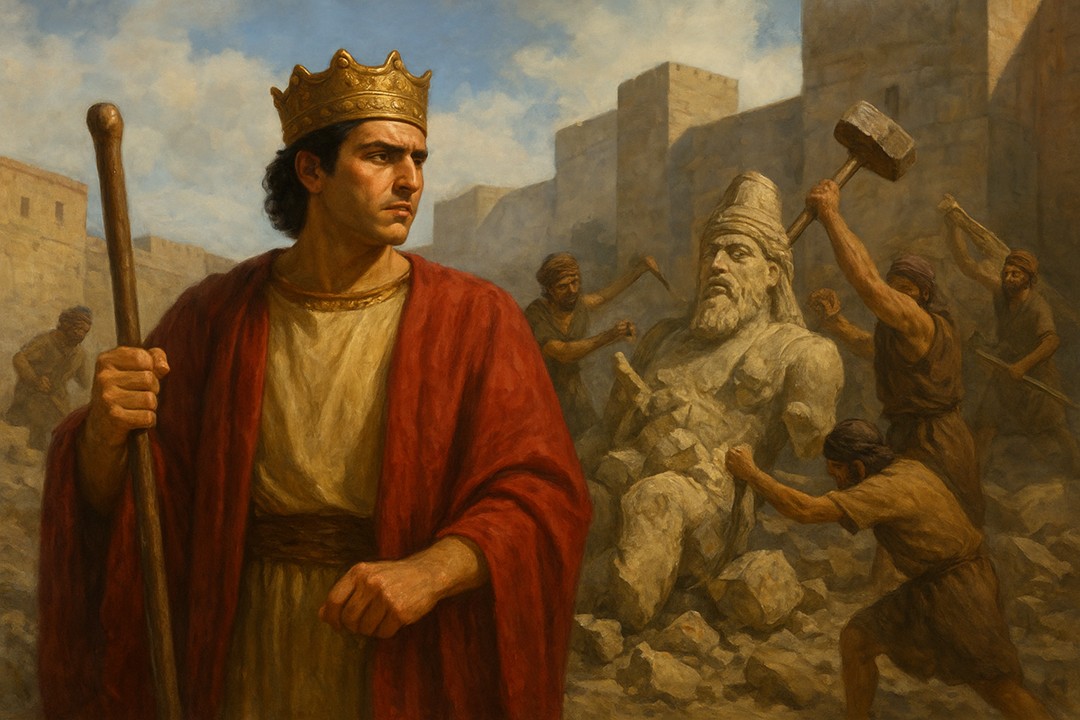
There’s a striking passage that describes Josiah ridding Judah of the land’s idols.
In the twelfth year, he began to purge Judah and Jerusalem of the high places, the wooden images, the carved images, and the molded images. They broke down the altars of the Baals in his presence, and the incense altars which were above them he cut down; and the wooden images, the carved images, and the molded images he broke in pieces, and made dust of them and scattered it on the graves of those who had sacrificed to them. He also burned the bones of the priests on their altars and cleansed Judah and Jerusalem. (2 Chron. 34:3-5
How does that sound? Extreme? Graphic? Intense? Passionate?
We must have the determination to courageously smash the idols in our lives that will hinder our growth, dampen our zeal, and undermine our relationship with the Lord. What idols do you need to eliminate from your life?
- The idol of sinful pleasures?
- The idol of material possessions?

- The idol of people’s praise?
- The idol of worldly prestige?
- The idol of exploitive power?
- The idol of popular people?
- The idol of powerful politicians?
- The idol of secular passions?
#5 Zealous Believers Submit to God’s Word and Serve Him
During this revival of God’s people, the High Priest Hilkiah found the book of the law buried in the Temple. When they read it to Josiah, he reacted with deep emotion and commanded that it be read to all the people. As a result, a covenant was made that they would return to God’s Word and obey it. In doing so, they restored the worship, cleansed the Temple, and reinstituted the Passover. The text says that the people had never seen such devotion since the days of Samuel the prophet.
Spiritual zeal cannot be maintained apart from the Word and separate from service. Our mission, ministry, and worship are affected by our zeal and are further impacted by it.
At Josiah’s death his life is summed up with this description in 2 Kings 23:25: “Before him there was no king like Josiah, who turned to the Lord with all his heart and with all his soul and with all his might.”
When the obituary of your life is published, what will be written?
–Ken Weliever, The Preacherman
hi p
 ThePreachersWord
Pingback: Weekly Recap: November 3-7 | ThePreachersWord