
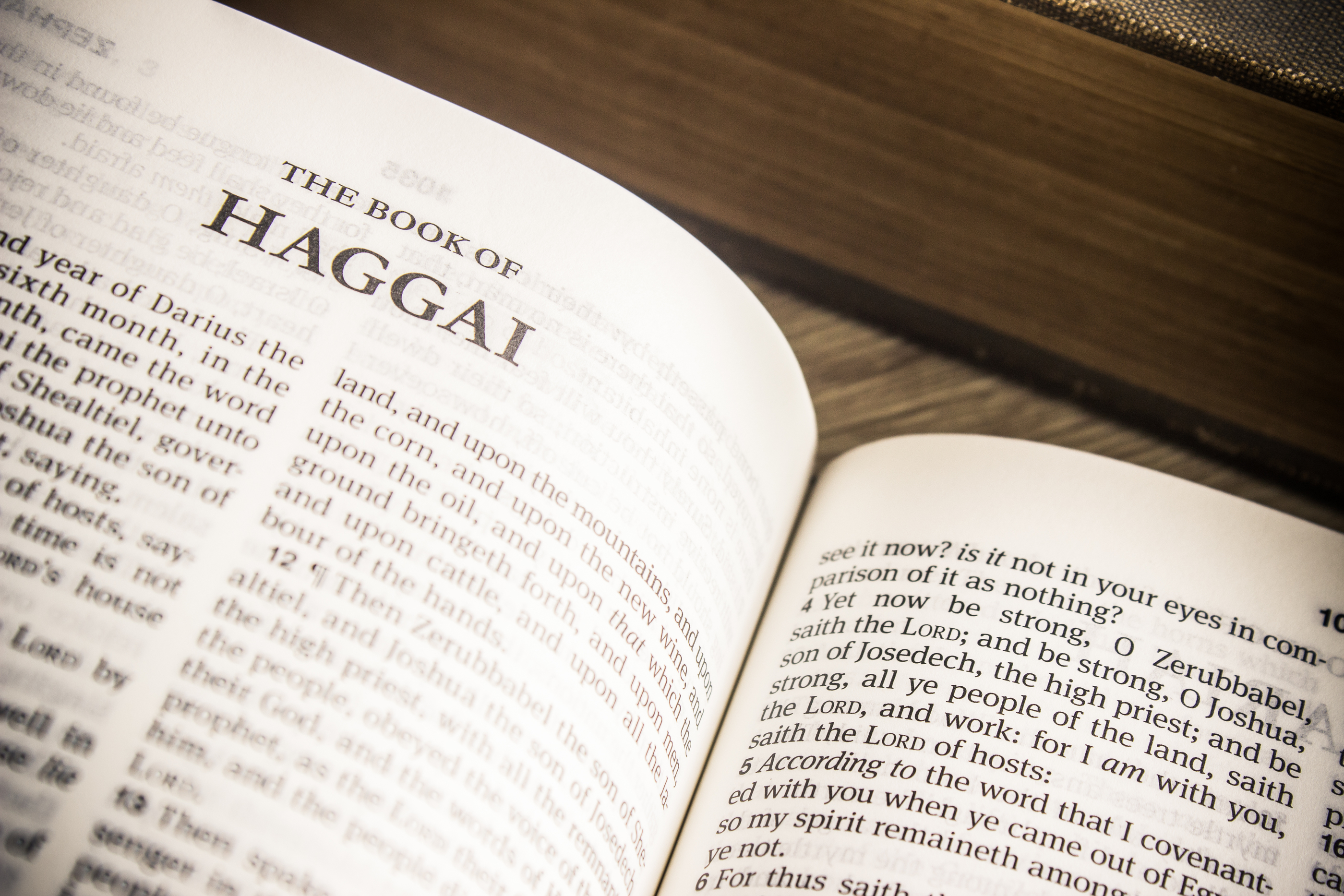
“The book of Haggai is of minor length but major importance,” observed David West in his lesson, “Putting God First” in yesterday’s Florida College Lecture program.
This lesson, as are all the lessons in this Lecture series, “Come, Let Us Return To The Lord,” from the preaching of the Minor Prophets are still relevant to our 21st century lifestyle and contain great applications.
Haggai prophesied around 520 BC. His mission was to admonish the people to finish rebuilding the Temple. The foundations were laid over 15 years earlier, but the work had come to halt.
“Consider your ways,” challenged Haggai. The people enjoyed the comforts of their homes, while the house of God lay in ruins. They had become distracted, grown weary, and accepted the status quo. As David wrote, “Their problem was spiritual indifference.”
They had excuses for their lack of activity. “It isn’t the right time to rebuild the house of the Lord.” But, when would be the right time? Billy Sunday once called an excuse “the skin of a reason stuff with a lie.” The real issue was one of priorities. They failed to put God first.
The prophet calls on them to obey God’s commands, trust in His promises, honor His name, and get to work.
“Consider your ways.” Four times in two short chapters Haggai says to “consider.” It’s a practical and relevant thought for us today.
God challenges each of us to examine ourselves. Our hearts. Our faith. Our commitment to Christ (2Cor. 13:5). To look into the mirror of God’s Word and see ourselves as He sees us (Jas. 1:22-25). To test our own work (Gal. 6:3-5).
In his lecture David warned, “Don’t consider the ways of others. Consider your own. Be honest. Be brutal. Where do you stand with God today? What hinders you?”
The challenge to “consider your ways” is applicable to all of us.
Shepherds, consider your ways. Are you tending, feeding, and protecting the flock of God? Are you providing spiritual leadership? Are you setting a godly example for others to follow? Are there areas in which you need to improve as a servant-leader? If you are falling short or failing your God-ordained trust, consider your ways.
Preachers, consider your ways. Are you preaching the Word in season and out of season? Are you speaking the Truth in love? Are you working with your Shepherds to equip the saints for ministry? Are you doing the work of an evangelist? Are you fulfilling your ministry? If not, consider your ways.
Deacons, consider your ways. Are you serving the needs of the Shepherds and the congregation? Are you a deacon in name only with no work to do? Are you supporting the mission of the church and the vision cast by your Shepherds? If you’re not serving, consider your ways.
Parents, consider your ways. Are you training your children in the nurture and admonition of the Lord? Are you teaching them to honor those in authority? Are you setting a godly example before them? Are spiritual matters a priority in your home? If not, consider your ways.
Brethren, consider your ways. Like Israel of old are you making excuses for leaving the Lord’s work undone? Are you paying more attention to your personal wants, needs, and even luxuries and neglecting the House of God? Have you become indifferent to your calling? Have you drifted? Have you become more conformed to the world instead of being conformed to Christ? Consider your ways.
The Bible says when we know to do good and fail to do it, it is sin (Jas. 4:17). Could it be that our greatest shortcoming is not some egregious sin or moral failure, but simply failing to do what we know we ought to do.
“Consider your ways,” says The Lord of Hosts.
–Ken Weliever, The Preacherman
 ThePreachersWord
Pingback: Weekly Recap: February 3-7 | ThePreachersWord