
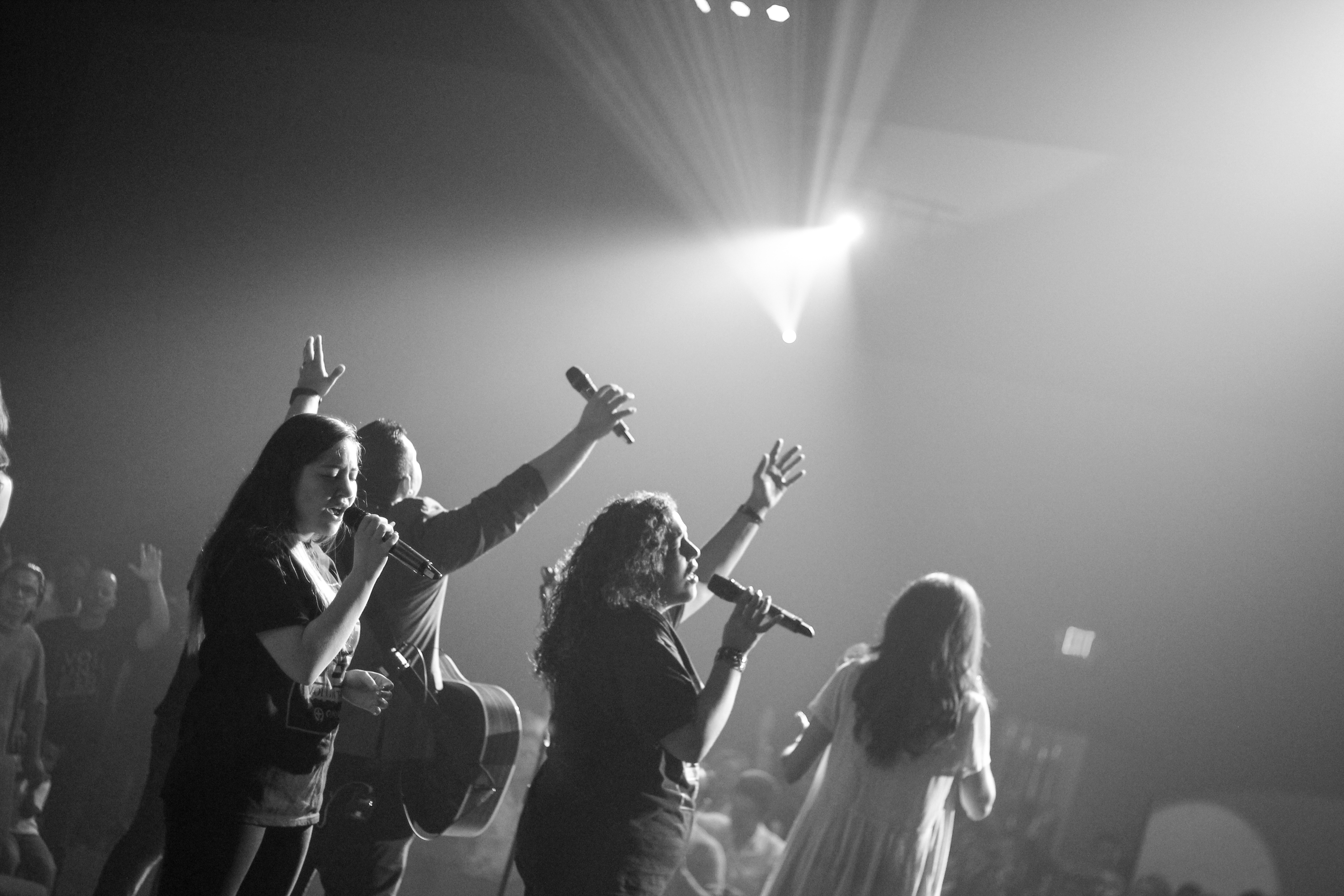
Last Fall at the annual Sing! Conference in Nashville, Tennessee, author and minister Alistair Begg sounded a warning against the “consumer worship” mindset in many churches.
Begg challenged attendees, including preachers, pastors, and church leaders to return to a “serious engagement with the Bible.”
As reported in The Christian Post by assistant editor Leah MarieAnn Klett, Begg lamented the disappearance of the pulpit in many churches, which “once stood as a monumental symbol of spiritual authority.”
The emergence of plexiglass bar stools, Begg opined was more than just a design preference, but an attempt to make “worship spaces feel less formal and more accessible. “It’s a noble prospect,” Begg said, “but there’s an unfortunate symbolism to it.”
For Begg, the decline of the raised pulpit is emblematic of a broader issue: the diminishing role of Scripture in congregational life. He contended that modern churchgoers often arrive not with an expectation to encounter God’s Word, but with a more casual mindset.
“Instead of coming into worship with the express understanding that all of this begins with God in His glory, people come with coffee in hand, saying, ‘Let’s see if he’s got something good for us today,’” he said.
“Expositional preaching gives way to inspirational talks, which gives way to therapeutical endeavors,” Begg continued. “I’m not sure that America understands just how deep the problem is, in relationship to biblical illiteracy. You cannot continue to make your journey through life without your Bible, not as a talisman, not as something just to be revered in a corner, but without the Bible as our daily source of knowledge and encounter with God.”
In the past six years, we have visited and/or preached in somewhere between 75-100 churches, and have yet to see the plexiglass bar stool in place of the pulpit. Since I don’t watch today’s televangelists, I didn’t even know it was a thing.
However, Begg’s point about a consumer mindset is a challenge in today’s scripturally illiterate and pleasure seeking world. A single google search of “consumer worship” reveals preachers, pastors and authors from various theological perspectives expressing concern and warning against this attitude. Too often church-goers come, not to “worship God in spirit and in truth” (Jn.4:24), but to be entertained. To enjoy the band and/or the choir.
As one writer expressed it, Consumer Worship occurs when members of the congregation get caught up in the “show”…and begin to view the worship time as an event. Much the same way music fans view a concert of their favorite artist or band”
Bible preaching, in some churches, has been replaced with motivational talks, feel-good messages, and non-offensive generic lessons filled with stories, jokes, and human wisdom. Other churches have put more emphasis on political or social issues instead of scriptural subjects.
The New Testament records Peter, Paul, and the other apostles and evangelists going into cities, towns, villages with the soul-saving gospel message. Timothy was told to “preach the Word” (2 Tim. 4:1). Titus was exhorted to “set in order the things that are lacking.” He was to appoint men as spiritual Shepherds, who would not only “feed the flock” (Ax. 20:28), but “hold firm to the trustworthy word as taught, so that he may be able to give instruction in sound doctrine and also to rebuke those who contradict it” (Titus 1:9).
Worship in first century churches was Christ-centered, spiritually focused, and Divinely directed.
- Communion was a weekly observance to remember the life, death, resurrection and return of Jesus (Ax. 20:28; 1Cor. 11:17-32).
- The music was congregational singing as the worshiper not only praised God, made melody in their hearts, as they taught and admonished one another in psalms, hymns and spiritual songs (Eph. 5:19; Col. 3:16).
- The mission and ministry of the church was financed through liberal, sacrificial giving on the first day of the week (1 Cor. 16:1-2; 2 Cor. 9:6-9).
- Prayer was a prevalent and powerful part of their worship both public and private (Ax. 4:23-31).
- And the preaching was not based on human wisdom, but divine wisdom exalting the cross and the crucified Christ (1Cor. 1:18-25; 2:1-5).
Reading the book of Acts and the New Testament epistles reminds us how far some have strayed from God’s Word. When Scripture is abandoned in order to please and placate the masses, pretty much any thing goes and is passed off for worship.
Of course, attending a church that practices New Testament worship is not enough. We are called, not to be spectators, but participants. To personally, individually and fervently worship not only according to truth, but in spirit.
Worship is not designed to be a passive experience, but an active one. Robert Webber was right when he wrote, “Worship is a verb.”
–Ken Weliever, The Preacherman
 ThePreachersWord
Pingback: Weekly Recap: January 6-10 | ThePreachersWord